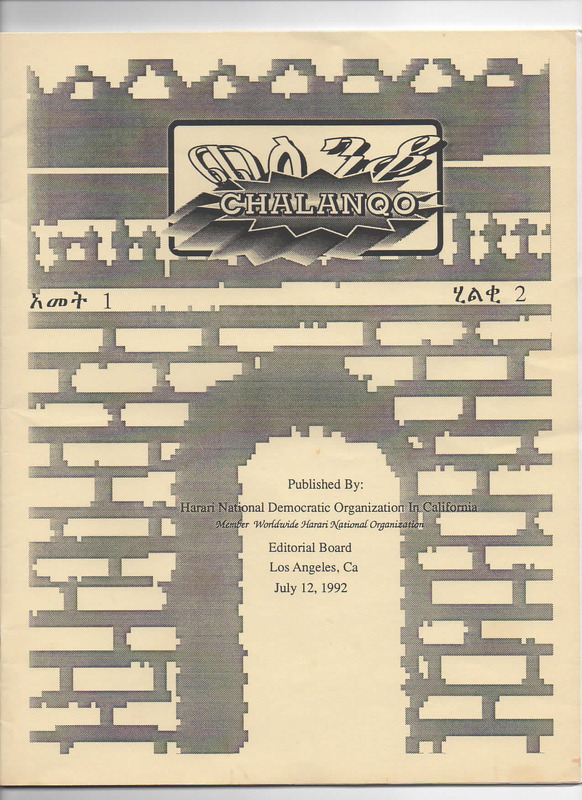
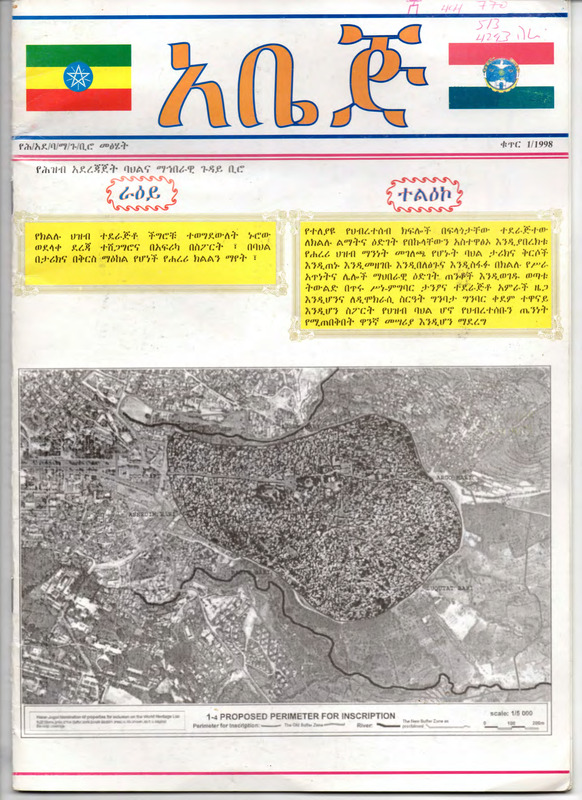
The paper Discussess the organizations objective and it's future plans including the developing of relationship with Harar and HNL. Articles from Harari organizations located in different cities in US , and Canada are available in the periodical.
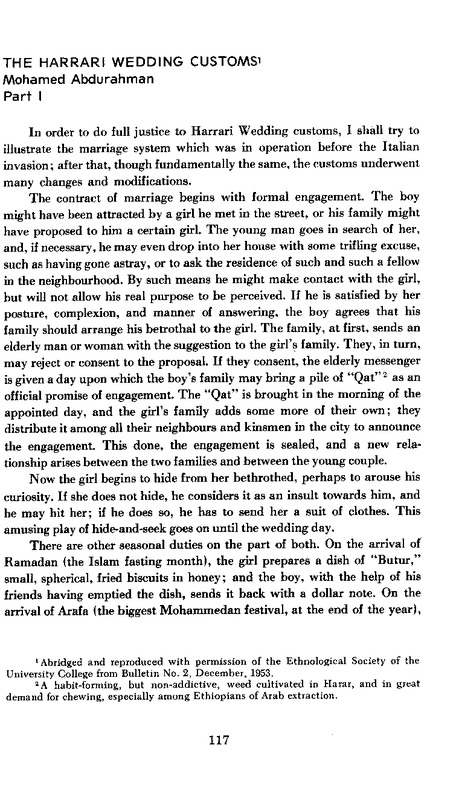
Articles of Harari social issues, culture, politics and more are discussed.Most part is written in Geez phont except one article, "Harari Wedding" in English.
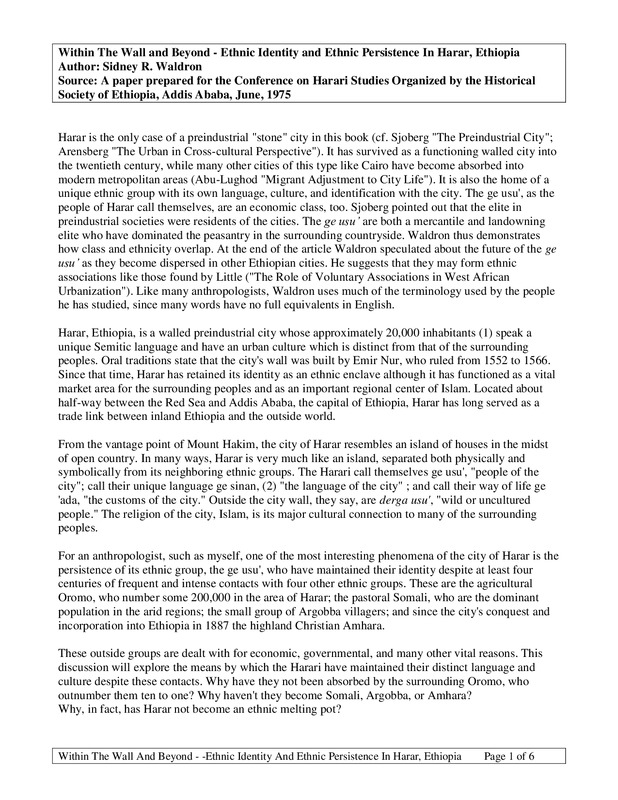
Harar is the only case of a preindustrial "stone" city in this book (cf. Sjoberg "The Preindustrial City"; Arensberg "The Urban in Cross-cultural Perspective"). It has survived as a functioning walled city into the twentieth century, while many other cities of this type like Cairo have become absorbed into modern metropolitan areas (Abu-Lughod "Migrant Adjustment to City Life"). It is also the home of a unique ethnic group with its own language, culture, and identification with the city. The ge usu', as the people of Harar call themselves, are an economic class, too. Sjoberg pointed out that the elite in preindustrial societies were residents of the cities. The ge usu’ are both a mercantile and landowning elite who have dominated the peasantry in the surrounding countryside. Waldron thus demonstrates how class and ethnicity overlap. At the end of the article Waldron speculated about the future of the ge usu’ as they become dispersed in other Ethiopian cities. He suggests that they may form ethnic associations like those found by Little ("The Role of Voluntary Associations in West African Urbanization"). Like many anthropologists, Waldron uses much of the terminology used by the people he has studied, since many words have no full equivalents in English.Harar, Ethiopia, is a walled preindustrial city whose approximately 20,000 inhabitants (1) speak a unique Semitic language and have an urban culture which is distinct from that of the surrounding peoples. Oral traditions state that the city's wall was built by Emir Nur, who ruled from 1552 to 1566. Since that time, Harar has retained its identity as an ethnic enclave although it has functioned as a vital market area for the surrounding peoples and as an important regional center of Islam. Located about half-way between the Red Sea and Addis Ababa, the capital of Ethiopia, Harar has long served as a trade link between inland Ethiopia and the outside world.
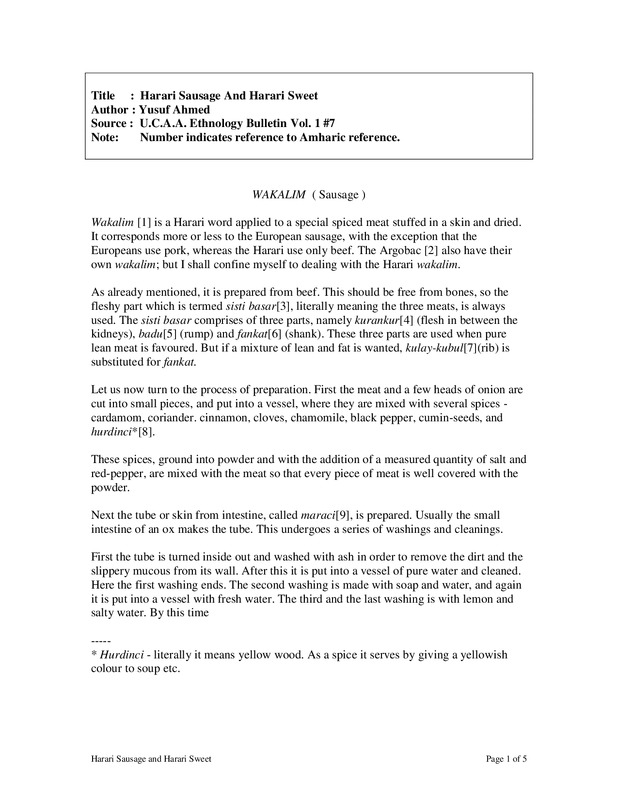
Wakalim [1] is a Harari word applied to a special spiced meat stuffed in a skin and dried. It corresponds more or less to the European sausage, with the exception that the Europeans use pork, whereas the Harari use only beef. The Argobac [2] also have their own wakalim; but I shall confine myself to dealing with the Harari wakalim.Mutabbak[1] is a small round sweet made of sesame seed and honey. It is usually prepared for a marriage feast, when it is provided by the bride's parents and for kalam-masbar*.[2] But now some people, mostly Arabs, have begun to sell it as a sweet under the name of mugalgal.
The weighted digging stick (Fig. 1) is an integralcomponent of the toolkit employed in agriculture in thevicinity of the old walled city of Harar, Ethiopia (see note 1)where it is primarily used as a tilling instrument in soilsunsuitable for the simple Ethiopian plough
The Mugads of Harar were semi-permanent groups formed of both boys and girls of the same age (older than 15 or 16) and from the same neighbourhood. This interesting institution, peculiar to Harar, disappeared some twenty years ago and therefore, the following article is based either on the stories of old Adari people, who in their youth used to take part in Mugad activities or on the still existing traditions, such as songs.
Kilwa is a second Mawsim, and from Kilwa to al-Qumur is a third
III
The Formation of Islamic Centers
If the immigration to Abyssinia in the very early years of
Islam represented the first contact of Muslims with the Horn of
Africa, Ibn Hishim’s aZ-S’ra al-Nabawiyyah is a first-hand source
on this issue. The Somaliland forming a part of the Arab world
is very clear in Ibn Hawqal’s map of Diyar al-CArab (the Arab
Homeland). Besides the above-mentioned map of Diyar al- Arab
Ibn Hawqal also drew other different maps of the Muslim World,
and also a map of the World in his Kitab STrat aZ-Ard (the Shape
of the Earth). This work was printed in Leiden in 1938.
Al-MaqdisT (d. 990) in his Ahsan al-Taq5asm fT Macrifat al-
AqTaZm (on World Regional Geography), pointed very clearly to
the existence of Muslim centers along the coastal strip of Somalia,
and mentioned Zeila as the biggest Muslim center in the
Autal (Awdal) land. As well, al-YaCqibi (d. 905) in his al-
BuZdjn (The Countries) was the first Arabic writer to mention
Zeila as a Muslim center in the Berber coast.
From the thirteenth century onwards Muslim scholars began
writing on the history, geography, and issues related to the
Muslim world using a new and different approach. They started
putting all the information that they had witnessed, had been
told to them, or had been collected from other written sources
into huge books called “Al-MawsTiah” (the Encyclopaedias). Most
Muslim writings of that style contained some information about
Somaliland and Muslims of the Horn of Africa. But the most important
of the MawsuCah to mention Somalia was the one written
by Ibn Fadl al-cUmari (1301-1349). Entitled Mas-Zik al-Absar
fiMamalik al-Amsacr, this MawsuCah gives us detailed information
about the formation of early Muslim centers in the hinterland of
the Horn of Africa. Unfortunately this work remains unpublished.
A copy of it is available as Ms. in Oxford University Library
(Ms. Pococke 191, Bod.).
Then Ibn Khaldun,7 recalling Ibn Sacrd and Aba al-Fida’s
accounts,8 provided additional information about the early days
of Muslim rulers of the region.
Ibn Batuta (1304-1377) is unique among the travelers of his
time. His descriptions are more accurate and his analyses more
plausible. From his account we learn that Somali Muslim centers
were giving great importance to education. Students from far
places were given lodgings and food, and Ibn Batuta himself was
lodged in the students’ house in Mogadishu during his visit to
Somalia, which took place in 1331. His eyewitness accounts are
recorded in his book, Tuhfat al-Nazzar fr Ghara’b al-Amsar Wa144
MOHAMEP HAJI MUKHTAR
CAja’b aZ-Asfar, known as “RihZat Ibn Batuta” (Voyages of Ibn
Batuta).9
IV
The Struggle Between Islam and Christianity in the Horn
As we have already seen, Islam was spreading inland from
the coast along the main rivers, the Shabelle and the Juba, using
the Zeila-Harar trade route into the highlands of Abyssinia and,
from the sixth century of Islam, founding kingdoms known as “Mamnlik
al-Tiriz al-IslgmT” (the edge of Muslim kingdoms). Al-
Maqrizr (1364-1442) provided one of the authoritative accounts
of the struggle between the Muslim sultanates and Christian kingdoms
in his AZ-IZmcm man bi Ard al-Habashah Min MulLJTa Z-IsZ7m ,
(a survey of the Moslem Princes in Abyssinia). It is also very
important to mention another book by the same author called AZDhahab
aZ-Masbik ff Dhikr man Hajja min aZ-KhuZafS’wa-aZ-MuZl7k
(a book on those caliphs and kings who went on the Pilgrimage
during 1435-1437). This book contains interviews, collected by
the author over these three years of his own stay in Mecca, with
pilgrims from many parts of the Muslim world and especially Africa.
H~mid cImarah is another scholar who has studied this
issue and his book CAZ3q-t al-Dawlah al-MamZukiyah bi al-Duwal
al-Ifr’qiyah (the relations between the Mamluk state of Egypt
and the African States), covers the relations between Egypt and
Abyssinia during the Mamluk Dynasty.
No less important as a source is the encyclopaedic type of
book by al-Qalqashandl (1355-1481) known as SubhT aZ-ACshf7a
Sinacat al- Insha’. This book is in fourteen volumes, and the
major part of volumes 5, 6, and 8 deals with the Muslim Sultanates
of the Horn of Africa and their struggle with Christian
Kingdoms of Abyssinia. Although Muslim historians and geographers
devoted much attention to the Muslims of east Africa and the
Horn, the most significant account of the relations between Islam
and Christianity in the region is Tuhfat aZ-Zaman, known as
Futuh aZ-Habasha (the conquest of Abyssinia). The importance of
this book is that Shihab al-Din, the writer, was an eyewitness
to many of the events which he recorded, as he accompanied the
Imam (Ahmad Gurey) in his conquests in Abyssinia between 1506
and 1542.10
Eastern Ethiopia's history is shrouded in mystery. Most archaeologists investigate early hominids like Lucy, the famous Australopithecus afarensis, or study the great civilizations of the north like Gondar and Axum. The east, though, is virtually unknown, and only enigmatic ruins and strange legends remain.Scattered around eastern Ethiopia all the way to Somaliland and the Red Sea are the ruins of towns with large stone buildings unlike anything made by the modern Oromo and Somali peoples. These are the remnants of the little-known Harla civilization. Wanting to learn more, I contacted archaeologist, author, and Harar tour guide Muhammed Jami Guleid (guleidhr @yahoo.com). "Dake", as everybody here calls him, helped me travel to Somaliland last year and is an invaluable resource for local culture and history. He knows everybody and he's excavated Harla graves in Ethiopia's Somali region and in Somaliland.They were a race of giants, people say, and immensely strong. They'd perform amazing feats of strength like playing with balls made from the entire hide of a goat. A schoolkid we gave a lift to told us the Harla were three meters tall! This rumor probably came about because of their unusual graves. They're long and thin, sometimes three or four meters long, although the skeletons in them aren't unusually tall. The graves are usually covered with a layer of ash (probably from burnt offerings), the skeleton of a sacrificed cow, and below that a stone slab sealing the tomb.
Every afternoon in Harar, you see men walking along carrying plastic bags filled with leaves. Hararis aren't big fans of salads; they're chewing these leaves for a completely different reason. It gets them high.Qat (pronounced "chat" in Harari, Amharic, and Somali) is a narcotic leaf from a fast-growing bush found all over the Horn of Africa and Yemen. It's legal and hugely popular in this region.In Harari culture it's mostly the men who chew, although some women do as well. Many people have a regular birtcha (qat-chewing session) where they meet most afternoons to socialize and work.I'm not going to be coy like some travel writers and talk about drugs in foreign countries while pretending I haven't used them. When I'm in Harar I chew qat regularly. I attend a birtcha at the home of a man who works in one of the government bureaus. Birtchas usually attract people who have similar jobs, political views, or who are friends from childhood. My birtcha includes dictionary writers, government workers, and a public prosecutor. A birtcha gives people a chance to while away the afternoon in conversation.
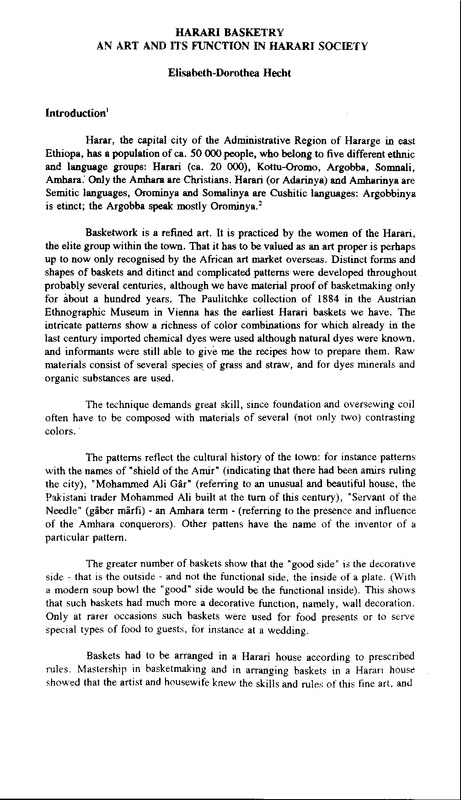
What makes an adventure traveler return to a place he's been before? When so many other destinations beckon, why spend two months in a town you've already seen?Because there's so much more to see. Harar, in eastern Ethiopia between the lush central highlands and the Somali desert, can take a lifetime to understand. For a thousand years it's been a crossroads of cultures, where caravans from the Red Sea met Central African merchants, where scholars and poets have traded ideas, where a dozen languages are heard in the streets.Harar's influence spread wide in those early days. Harari coins have been found in India and China, and a couple of my Harari friends have subtly Chinese features.The Harari have always mixed with other tribes. Some say if you live within the medieval walls of the Jugol, the old city, and follow Harari ways, that you are one of them. Hararis have their own language spoken only by the Jugol's 20,000 residents, yet this language has created literature, poetry, and song for centuries. As Harar faces the new millennium, a dedicated group of artists and intellectuals are working to preserve and add to this heritage
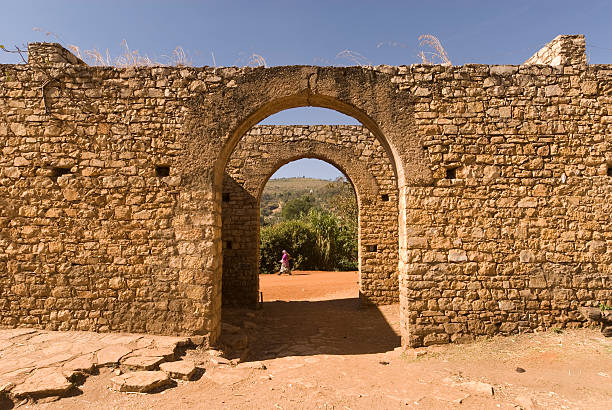
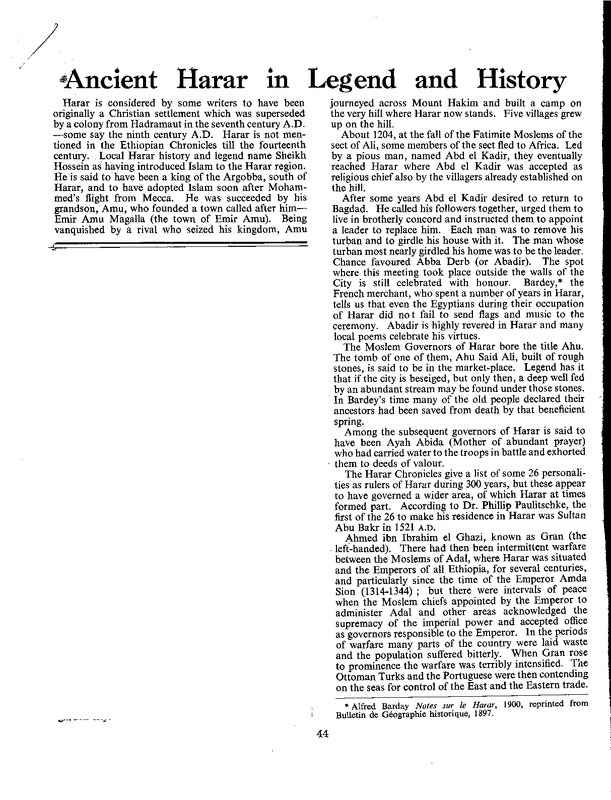
The ancient city-state of Harar, a micro-cultural island in Eastern Ethiopia, has been for centuries a crucial commercial crossroad and the major East African Islamic centre.
Harar’s inhabitants call their town simply Gey, “the City”, or Jugol, the wall that encloses and symbolizes it, but Harar is also named Madinat al-Awliya “City of Saints”, as it is starred with hundreds of mosques, shrines and tombs of holy men. For Harari people, an urban, literate and highly educated population, ada (culture) and din (religion) are strictly interlocked.
Harari songs, called gey fäqär, “the Songs of the City”, are among the most signifcant expressions of local intangible cultural heritage. The Songs of the City, unique and diverse at once, openly represent Harari identity and concurrently reveal local intercultural adjustments and reactions to historical processes.
Today, Harari songs are mainly performed at weddings and tell about the new life of the newly-wedded couple. However, texts of gey fäqär also constantly refer to Islamic religion, as well as to historical memory, patriotism and cultural identity.
...At thirteen she decided to become a vocalist, despite vehemnet from family and friendswho insulted her and despised the fact that she sang in public. Shamitu married in thirteen…
Previous issues of this journal have carried information about early nineteenthcenturyvisits to the northern coast of Somalia by John Studdy Leigh, whoclaimed that he and not Richard Burton was the first European to succeed inpenetrating inland to the city of Harar. Leigh's claim was made in 1892 and hesaid his trip had been made in 1838-1839.1 Although Marcus and Page gave somecautious credence to Leigh's story, Kirkman subsequently showed that theevidence of Leigh's own journal proved that although he had been at Berbera in1838-1839, he had definitely not gone inland to Harar.2 The journal entries alsothrow doubt upon another of Leigh's assertions of 1892: that the people ofBerbera regarded him as "the first European that has visited . . . within .
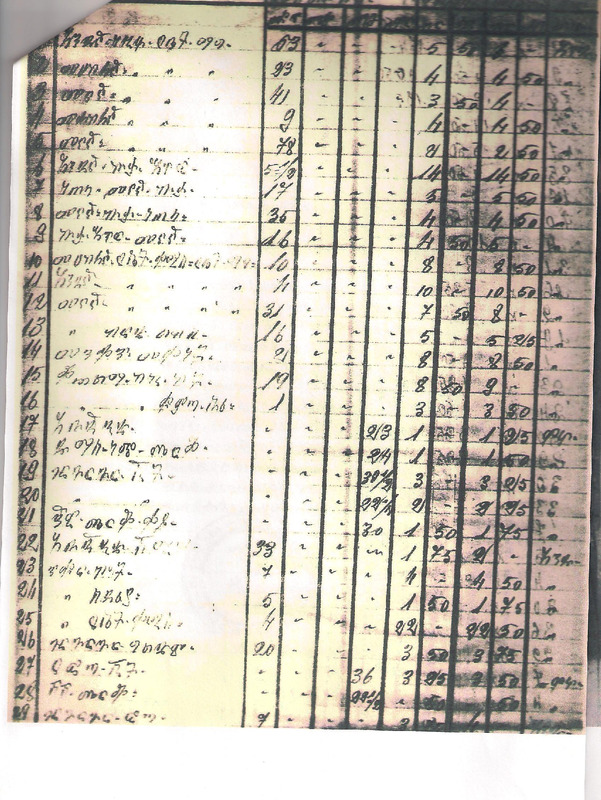
The document lists names of Hararies wanted by Haileselasie goveronment as stated for their involvment in the Harari Movement of the 1940s. The persons named are accused of multiple charges, some supporting the movement, emigrating , for mailing letters from and to foreign countries and others with charges of propagnda and financial assisstance. Document available In Abdela Sherif museum
Contribute
Login or click your token link to add a new record.