-
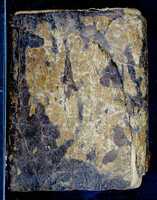
The Semitic Languagespresents a unique, comprehensive survey of 23 languages from their origins in antiquity to the present day. The volume includes: an introduction to the grammatical traditions, subgrouping and writing systems; individual descriptions of Old Semitic and Modern Semitic; and an overview of each language followed by detail on phonology, morphology, syntax, lexis and dialects.
-
The first work to offer 5,000 years of authoritative historical coverage of ancient and modern cities in the Middle East and North Africa-from their founding to the present-highlighting each city's cultural, social, political, and economic significance.
-
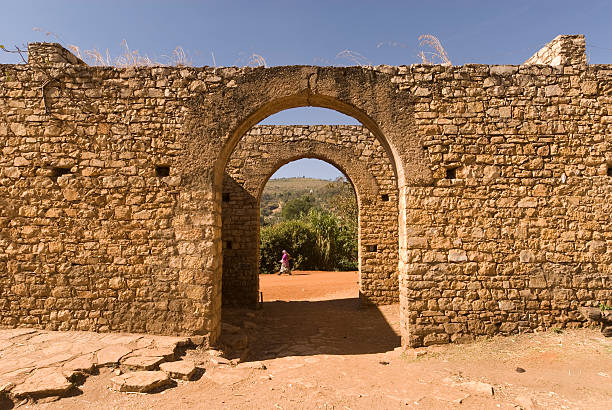
Nur ibn Mujahid eventually became successor as emir of Harar. It was during the 1550s that Emir Nur ibn Mujahid commissioned the construction of the city walls around Harar. Four meters high and with five gates, these city walls ..
-
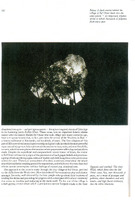
As a world religion Islam is based on a highly abstract and absolutenotion of the transcendent, which its followers establishand celebrate, in a seemingly contradictory fashion, at veryspecific sites: Mecca, Medina, Jerusalem, and in the vast andcomplex landscapes of mosques and Muslim saints' shrinesaround the world. Sacred locality has thus become a paradigmfor the relationship between the human and the transcendent, a model for urban planning, regional networks, imaginary spaces,and spiritual hierarchies alike. This importance of saintly places has, however, become increasingly complicated and troubled by reformist currents within Islam, on the one hand, and the emergence of modern archeology and anthropology, on the other.While they have often tended to posit the local in opposition to the universal, in this volume islam ologists, anthropologists,and sociologists offer new ways of thinking about the local, the place, and the conceptual landscapes and spaces of saints.
Chapter 7 The Making of a 'Harari' City in Ethiopia: Constructing and Contesting Saintly Places in Harar Patrick Desplat Introduction: Debating Muslims, …
-
-
In Ethiopia the language question is one of paramount importance, since the Constitution of1995 confers rights up to secession to population groups on the basis of their ethno-linguisitccharacter. Ethiopia’s geo-political units are thus primarily defined by language and ethnicity.In this context, the ancient city of Harar presents a particularly interesting case for study andrepresents a unique geo-political entity within Ethiopia. The huge linguistic and relatedsocio-political and ethnic diversities of Harar produce a microcosm of the Ethiopian State itselfand thus provide a fertile ground for asking questions about multilingualism, federalism andethnicity that have relevance beyond Harari Region itself.The primary objective of this study was to make a critical appraisal of the implementation ofvernacular education in the Harari region and examine the challenges of providing primaryeducation in several Ethiopian and international languages, i.e. English, Amharic, Oromo,Arabic and Harari. The study made a comparative assessment of the use of languages asmedia of instruction for primary education, and concluded with an appraisal of the relativestrengths and weaknesses in the use of each language, from both pedagogical and socialperspectives.The study has two major focal areas: policy formulation and policy implementation. The first partlooked at the current educational language policy against the background of the socio-culturalhistory of the country and outlined the ideological foundations of this policy and its political andsocio-economic implications. The second part examined the implementation model adopted anddealt with issues, such as the level of development of the languages involved in the schoolsystem, the school environment, the appropriateness of orthography, the teaching methods andmaterials used.The research was a field study in which qualitative and quantitative primary data were gathered,classified, analyzed and interpreted using various techniques. Because of the multipleobjectives outlined above, the study followed a mixed research method such that a qualitativeresearch paradigm was be used for some parts of the research and a quantitative researchparadigm for other parts. The two research paradigms are considered to be complementary inthe sense that one set of results is complemented by another set of results and generalizationsare made on findings that emerge from both methods together. The qualitative approach is usedto carry out inquiry into the perceptions and aspirations of the community at the individual aswell as the collective level. Types of qualitative research methods that have been employed togather data include: historical survey, ethnographic research and phenomenological research.The following conclusions have been drawn on the implementation of the policy of vernaculareducation in Harari.It is clearly a multilingual education model, involving the use of three languages. Harari andOromo are local mother tongues (L1) and Amharic is the indigenous language of widercommunication (LWC) (L2). English and Arabic are foreign languages (L3). This model is in linewith UNESCO’s recommendation of having three languages (L1, L2 and L3) in multilingualprimary education; a recommendation that follows from the position that teaching in the mothertongue is most effective in the academic achievement and cognitive development of the child.The model implemented in Harari has, therefore, a strong component of mother tongue education.
-
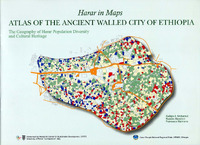
Copy right release to Everything Harar. com by Harari State President Office.
-
Harar was an Arab state peopled by a mixed population ofArabs, SomAlis, Gallas, and half-breeds, collectively called Hararis,the city itself garrisoned by Egypt. It was a magnificent highlandcountry of agricultural land and tropical forests, often risingto an elevation of some nine thousand feet, if not more ; its slopesdescended on the east to Somililand, and on the west to thegreat Hawash Eiver depression ; beyond was Shoa, one of thekingdoms of Abyssinia.History tells us of conflicts between Christian Abyssinia andthe Mahommedan state of Harar from time to time; but thepine-clad passes of entry from the Hawash were difficult to forceand easily defended. Harar was safe and isolated, and thesoldiers of Abyssinia and Harar alike were indifferently armedwith spears, shields, and antiquated muskets.When Egypt proposed withdrawing from Harar in 1884, twoseparate missions were sent up from Aden to Harar to report onthe military situation, and to facOitate the withdrawal of theEgyptian troops.Harar was practically in our hands, and it is conceivable thatcould later events have been foreseen, and considering its undoubtedcommercial value, it might have remained under ourinfluence.Though the fact was not likely to have been recognised inthe state of our knowledge at the time, Harar offered a valuablebuffer-state, which, if strengthened and supported, might havekept apart the well-armed Abyssinians, who are Christians, fromthe badly-armed Somdlis, who are Mahommedans. But at thattime the influx of arms had scarcely begun, and Abyssinianrestlessness was not so apparent.Be that as it may, the British saw the Egyptians safely downto Zeyla, and set up an old Arab family government, that ofthe Emir Abdillahi, with a comparatively weak escort of Hararis,armed with muskets and rifles
-
Ahmad ibn Ibrihim al-Ghazi (c. 1506 – February 21, 1543) was an Imam and General of Adal who defeated Emperor Lebna Dengel of Ethiopia. Nicknamed Gurey in Somali and Gragn in Amharic (Graññ), both meaning "the left-handed," he embarked on a conquest which brought three-quarters of Ethiopia under the power of the Muslim Kingdom of Adal during the Ethiopian-Adal War from 1529-43. He was known as Sahib al-Fath (the conqueror) among his Muslim subjects, and as Imam Ahmad. He used Ottoman Empire military tactics to train his soldiers. Imam Ahmad's success in Ethiopia led to an early European intervention in Africa when the Ethiopian Emperor asked the Portuguese to assist in repelling the Muslim army. He is remembered by Somalis as a national hero, by Ethiopians as a ferocious and unwelcome conqueror. This mixed legacy is an example of how events and lives are differently regarded by different people. Whether someone is a hero or a villain depends on who tells the story, or on who writes the history. His empire ended with his own death. Initially, the Imam attacked Ethiopia in retaliation for an attack on his own Sultanate, then continued to subjugate Ethiopia. His motive appears to have been religious, since he called for a jihad against Ethiopia, which can be regarded as a defensive war, or as a call to extend the borders of the Islamic world. Al-Ghazi is used as a title by Muslim soldiers who help to spread the faith of Islam.
-
"FROM Begul the army marched to Waz, thence to Gett, and from Gett to Harla, still laying waste the country. From Harla they marched five days to Delhoya, being determined to make a severe example of this place, because the inhabitants had killed the governor the king had left with them, and, making large sires for the purpose, had burnt and tormented the Christians residing there. He came, therefore, upon this town, and surrounded it in the night; and, after putting men, women, and children to the sword, he razed it to the ground.FROM Delhoya he proceeded to Degwa, from thence to Wafga, which he treated in the same manner as Delhoya, and t^ien entered the province of Dawaro, where he understood that Hydar, governor of that province, with Sabereddin, and a very valuable convoy coming to him, under their conduct, from Shoa, Were intercepted by Hydar's people, and their guard cut to pieces. Instead, therefore, of proceeding to Shoa, as his intention was, he encamped at Bahalla, and there kept the feast of Christmas, laying the whole province, by parties, under military execution ; and hearing there that Joseph, governor of Serca, was in understanding with those of Dawaro, he put him in prison, carrying off all his horses, asses, mules, and a prodigious quantity of other cattle, which he drove before him, and ended his expedition by his entry into Shoa"
-
"Harrar dates from the seventh century. It appears that the Ameer Ahmed died very soon after the departure of Burton; that the citizens of Harrar made Khalifa Atra Ameer, but he was deposed after three days' reign by Mahomet, a native of the Ala tribe. He was the Ameer strangled (by Raouf). Khalifa Atra is still alive, and I hope to see him to-morrow. The Queen-dowager, mother of Ameer Ahmed, paid me a visit this evening. Burton mentions her as Gershi Fatima. She is the grandmother of Yuseuf Ahmed, whom I have made Governor. She is a plucky old lady. I gave her £ 15 backsheesh. There are many here who remember Burton's visit. ... I am living in the palace that Burton was received in; the Ameers lived in a small tower, not twenty feet square, of two stages, and surrounded by their harem. ... I have just seen Khalifa Atra, who reigned for a few hours, and I told him it was better to be humble, and not high, than to be proud and elevated, for a fall has always to be feared; if one is near the ground one cannot fall very far"
-
CHAP. XLIII. (P.390)
THE PRINCIPALITY OF HURRUR.
“NOT many weeks had elapsed since certain substantial merchants of Hurrur, after visiting the shrine at Medina, and making a long and profitable sojourn in Alio Amba, had returned to their native land to enjoy the honours attaching to their religious pilgrimage. Slaves, ivory, and precious gums had been disposed of to great advantage in Arabia, and the proceeds invested in beads, berill^s, and broad cloth, with which the enterprising traders landed at the maritime town of Taj lira. Proceeding thence to Efat, they embarked their gains in slaves, mules, and cotton cloths; and designing to pass the residue of their days in ease and affluence, set out by way of Hurrur for the great annual fair at Berbera.
In advance of the time, however, these luckless individuals had ventured to speculate to their envious countrymen upon the advantage to be derived from foreign traffic and the presence of the white man. The incautious word had caught the ear of Abdel Yonag, the wily chief of the Hurrurhi, and letters were secretly despatched to his master the Ameer, representing the wealthy hajjis to COLONY OF ABABS. 391
be men of turbulent and ambitious views, who had devised dangerous innovations, and were plotting, with the Adaiel, the monopoly of the commerce in slaves. With hearts bounding at the sight of their native minarets, and utterly unconscious of the slander that had preceded them, the pilgrims entered the Isma-deen gate of the city; but ere return had been welcomed by wife or child, they were hurried by the soldiery to the presence of the despot, and, without even the mockery of a trial, were beaten to death with huge maces of iron.”