-
-
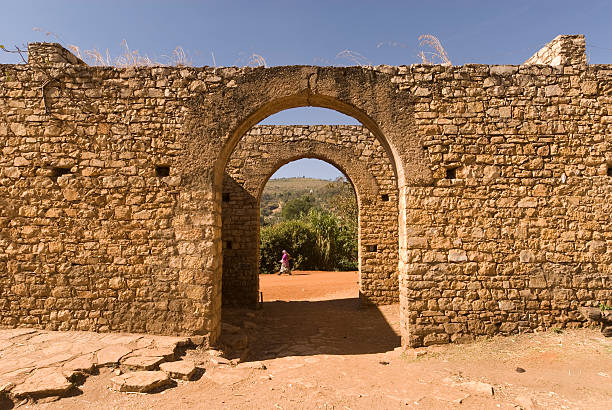
The survival of the city-state of Harar remains one of the 'mysteries of history of the region'.1 Harar, once a pivotal point for political dominance of the Horn of Africa, collapsed like a house of cards after the defeat of Gragn in the sixteenth century.2 But it survived as a trading and religious centre up to the region's incorporation into the Ethiopian empire in 1887. Immediately after the wars of Ahmad Gragn,
-
Breastfeeding for infants and young children provides the ideal food for healthy growth and development. Infants should be exclusively breastfed for the first six months and thereafter, the infants should receive nutritionally adequate and safe complementary foods while breastfeeding continues. Breastfeeding should continue for two years and beyond.
-
Monitoring patient satisfaction and service assessment are important and useful tools for quality improvement for clinical laboratories in particular and health care organizations in general.
-
Over a hundred years later, the Harari are described by the anthropologist Sidney Waldron, in much the same terms. He writes that this 'single city culture' of at least 15,000, effectively remains a self governing community aloof from the central administration; 'closed' through a strict preference for endogamy and the exclusion of others from its primary forms of social organization: the family, the friendship group and the community observance association, or afocha (1975, vii, ix, 111)[2] Waldron introduces us to the Harari in their own terms, as the Ge usu’ or, 'people of the city.'
-

-
This paper deals with the state of Harar in the first half of the 19th century. At this time forreasons explained in the first chapter Harar was no longer a strong sultanate it has been inits heyday of the 16th century. War with the Christian highland coupled with the Oromoraids has adversely affected the peaceful pursuit of the economic life, which factor wasinstrumental on the ultimate degeneration of the state power.
-
The study area, Haromaya watershed in eastern Ethiopia, is currently serving as a source of groundwater supply for the three major towns: Harar, Alemaya, Awaday and Haromaya University main campus, besides the rural areas where the farmers are also extracting groundwater for different purposes.
-
Ethiopia has an area of 1 098 000 km² and a total population of 53 123 253 (CSA,1998). The country is subdivided into administrative regions, one of them being Region13 or Harari National Regional State (HNRS) with the regional capital of Harar.HNRS was founded in 1994/1995 (Bekri, 1999). It has an area of 304.5 km² (MoA,1999) and is divided into 3 urban Highers with 19 Kebeles (urban administrativedistricts) and 17 rural Peasant Associations (PAs, rural administrative district). Higherone consists of Kebele 1-7 and it is mainly inhabited by Harari. Higher 2 includesKebele 14-19 and Higher 3 Kebele 8-13 respectively. Both are inhabited by a mix ofethnicities (Ayele, 1999). The altitude of the area ranges from 1300 to 2200 m abovesea level (Appendix 9.3) (MoA, 1999).
-
Ferrocement-Lined Underground Grain Silos in EthiopiaIn Harar Province, Ethiopia, underground pits are the traditional method of grain storage. It is estimated that 62 percent of the farmers use pit storage exclusively and a further 8 percent use pits in combination with other storage methods.**
-
On January 8, 1892 John Studdy Leigh rose in a meeting room of the California Academy of Science building in San Francisco to deliver the inaugural lecture of the Geographical Society of California.' His talk on"Somali Land, or the Eastern Horn of Africa" described a journey along the coast and into the interior of Somalia. Much of the exposition concerned his adventures and observations on a trip to Harar,
-
Historically, Harar has served as both the city centre of a region and an important regional sub centre to an Empire and nation. In the New Ethiopia, the city has been identified as the administrative centre of Region 13, recognizing its importance in the federalized union. For centuries it was Harari, or Adare, or in their own terms of reference, Ge usu’ [l] (literally, "people of the city"), who exercised dominance and control over the surrounding region.