test
-
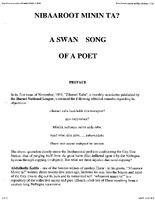
Nibarrot Mininta A Swan Song Of a Poet
Nibarrot Mininta, Written b y Abdulhafiz Khalifa, is a repositary of the collective aggony and pain of Harar resulting from a century- long Neftegna repression.... -
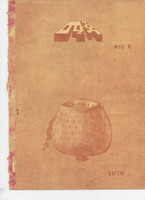
Meeja
Collection of Articles relating to Harar and Harari Cultural practices. -
Falak
The paper Discussess the organizations objective and it's future plans including the developing of relationship with Harar and HNL. Articles from Harari organizations located in different cities in US , and Canada are available in the periodical. -
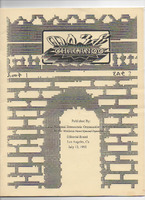
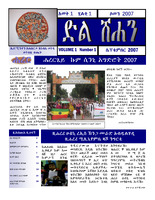
Chalanqo: Issue I, No:2
Articles of Harari social issues, culture, politics and more are discussed.Most part is written in Geez phont except one article, "Harari Wedding" in English. -
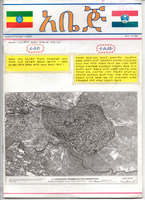
Abej 2
Articles reflecting History, Architecture, and important locations of Harar.... -
The Harari Wedding Customs
-
Ancient Harar In Legend And History
-
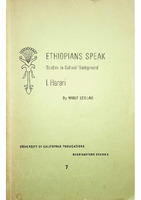
Within The Wall and Beyond - Ethnic Identity and Ethnic Persistence In Harar, Ethiopia
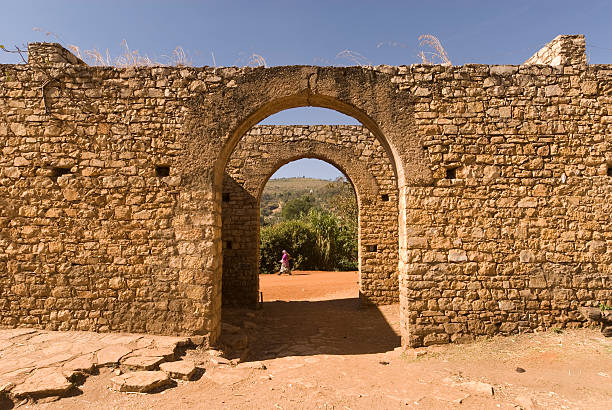
Harar is the only case of a preindustrial "stone" city in this book (cf. Sjoberg "The Preindustrial City"; Arensberg "The Urban in Cross-cultural Perspective"). It has survived as a functioning walled city into the twentieth century, while many other cities of this type like Cairo have become absorbed into modern metropolitan areas (Abu-Lughod "Migrant Adjustment to City Life"). It is also the home of a unique ethnic group with its own language, culture, and identification with the city. The ge usu', as the people of Harar call themselves, are an economic class, too. Sjoberg pointed out that the elite in preindustrial societies were residents of the cities. The ge usu’ are both a mercantile and landowning elite who have dominated the peasantry in the surrounding countryside. Waldron thus demonstrates how class and ethnicity overlap. At the end of the article Waldron speculated about the future of the ge usu’ as they become dispersed in other Ethiopian cities. He suggests that they may form ethnic associations like those found by Little ("The Role of Voluntary Associations in West African Urbanization"). Like many anthropologists, Waldron uses much of the terminology used by the people he has studied, since many words have no full equivalents in English.Harar, Ethiopia, is a walled preindustrial city whose approximately 20,000 inhabitants (1) speak a unique Semitic language and have an urban culture which is distinct from that of the surrounding peoples. Oral traditions state that the city's wall was built by Emir Nur, who ruled from 1552 to 1566. Since that time, Harar has retained its identity as an ethnic enclave although it has functioned as a vital market area for the surrounding peoples and as an important regional center of Islam. Located about half-way between the Red Sea and Addis Ababa, the capital of Ethiopia, Harar has long served as a trade link between inland Ethiopia and the outside world. -
Harari Sausage And Harari Sweet
Wakalim [1] is a Harari word applied to a special spiced meat stuffed in a skin and dried. It corresponds more or less to the European sausage, with the exception that the Europeans use pork, whereas the Harari use only beef. The Argobac [2] also have their own wakalim; but I shall confine myself to dealing with the Harari wakalim.Mutabbak[1] is a small round sweet made of sesame seed and honey. It is usually prepared for a marriage feast, when it is provided by the bride's parents and for kalam-masbar*.[2] But now some people, mostly Arabs, have begun to sell it as a sweet under the name of mugalgal. -
HARARI BASKETRY AN ART AND ITS FUNCTION IN HARARI SOCIETY
-
Basket Works Of Harar Part 2 of 2
-
Basket Works of Harar Part 1 of 2